In 2019, the Minnesota Twins won 101 games and broke the single-season record for home runs by a team, with 307.
Across the way in the National League that same year, the Washington Nationals, who started the season 16–31, captured the Wild Card in the National League, ran through the favored Dodgers and not-so-favored Cardinals and won their first-ever World Series championship, defeating the heavily-favored Houston Astros in seven games.
No team wins 101 games, or a World Series for that matter, without a lot going right. But, to quote ESPN’s 30 for 30 commercial narration, what if I told you that none of that stuff is possible without a Hennepin County judge and the final year of a lease agreement?
If not for that judge, and that flimsy, but legally-sound, lease agreement which called for the Twins to play out the 2002 season at the Hubert H. Humphrey Metrodome, baseball, and most certainly the 2019 season, would have looked a whole lot different.
In 2001, MLB Commissioner Bud Selig, along with a select few owners, hatched a plan to solve their woes. Publicly, this was about economics, but privately, this was about leverage.
The idea was to take baseball’s two lowest-performing franchises, the Montreal Expos and Minnesota Twins, and, in mafioso (or magician) terms, make them disappear.
Despite finishing 2001 with a winning record (85–77) for the first time since 1992, the Twins’ home park, the Metrodome, was a black hole for the franchise.
Doubling as the aging home of the NFL’s Minnesota Vikings, the multi-purpose stadium featured poor sightlines when adjusted for baseball, no internal revenue for signage, luxury seats, or parking, and a white, inflatable roof that made tracking fly balls difficult and could, on occasion, collapse due to heavy snow.
In 1997, the Twins neared a deal to relocate the franchise to North Carolina, but that deal fell apart due to insufficient stadium plans over there. The Twins carried on and continued to languish in the standings; the gloss of their 1987 and 1991 World Series titles all but faded away amidst bad management, a bad ballpark, and a local government, led by Governor, and former WWF superstar, Jesse “The Body” Ventura, vehemently against using public funds for a new ballpark.
In Montreal, the story was similar — crappy ballpark, crappy teams, indifferent local government and low attendance.
But while the Twins were still somewhat recent World Series winners, the Expos, founded in 1969, were never winners. The franchise made only one playoff appearance in 1981, and played at Olympic Stadium, a place designed to have a retractable roof, but it didn’t for years, then it did, but it was made out of Kevlar and leaked. The stadium would experience numerous mishaps of concrete falling, the roof collapsing, and games needing to be rescheduled or relocated as a result.
The 1994 season, however, will always be the one that changed everything.
Bursting at the seams with young, homegrown talent, the Expos rolled into August of that season way ahead of the mighty Atlanta Braves. By August 11th, the Expos were 74–40, six full games ahead of Atlanta in the NL East and owner of the best record in all of baseball.
Momentum had picked up that season as the city began looking favorably at the prospects of a new stadium for the Expos. Certainly, a playoff run would only help fuel talks and generate goodwill with the fans.
Then came the strike.
When it was all said and done, the 1994 strike hurt every team in baseball, but none more than Montreal.
Devastated by the loss of revenue, the small-market Expos conducted a fire sale of their top talent throughout the 1995 and 1996 seasons, decimating their chances of contention. The residual effect of fans’ anger over the strike compounded by the local fan base’s displeasure over the loss of talent doubled up to leave the Expos in shambles as a franchise.
In 2001, MLB had its own issues.
The ’94 strike had given players a whole new level of bargaining power with the owners, and while talk of a salary cap being installed was officially dead and buried, the rise of player salaries along with disparity setting in among small-market teams created a tidal wave of issues for Selig and the owners.
The public face part of the issue was economics — how do we solve the issue of ensuring each team has as close to an equal chance of contending as big market teams do?
The private side was — how do we, as owners, reassert our dominance over these players who are taking more and more of the revenue stream?
The answer? A massive overhaul of the MLB landscape and an action not seen in baseball since 1899 — the contraction of a franchise. However in this case, it would be two franchises.
The deal was:
- Contract the Expos and Twins.
- Move the 2001 World Series Champions, the Arizona Diamondbacks, from the NL West to the AL West.
- Move the Texas Rangers from the AL West to the AL Central.
- Move the Pittsburgh Pirates from the NL Central to the NL East.
- Twins 40-man roster players would be made available to the 28 remaining teams in a dispersal draft, with teams picking in reverse order of finish.
- Expos owner Jeffrey Loria would assume ownership of the Florida Marlins from incumbent owner John Henry and would be allowed to take three Major League and five minor league players from Montreal to Florida.
- Henry would assume ownership of the then-Anaheim Angels and be allowed to, like Loria, take a like number of players from Florida to Anaheim.
- The rest of the Expos players would be made available in the same dispersal draft as the Twins players.
- Twins owner Carl Pohlad would receive somewhere between $200–250 million from MLB as a return on his $34 million investment back in 1984.
You might be wondering, why in the hell would the current World Series champions agree to switch leagues literally days after winning the World Series as a National League team?
The answer is it didn’t matter whether they wanted to or not. When Arizona and Tampa Bay were granted their expansion franchises, those grants came with a provision that MLB could relocate them without objection within the first five years of existence.
D-Backs owner Jerry Colangelo had also been granted a loan by MLB at the outset of the franchise when he had trouble meeting payroll obligations, so while he was personally opposed to any such move, he was in no position, legally or ethically, to fight it. Plus, it was rumored that MLB would slide Colangelo a reparation of about $200 million under the guise of a “relocation fee.”
Baseball had proposed the largest single overhaul of a sport in North American history and the vote came down on November 6th, the day before the current CBA between the players and owners expired.
At the 2001 owners meeting in Chicago, the vote was cast and the massive overhaul of baseball’s landscape was given a resounding thumbs up in the form of a 28–2 vote.
The dissenting votes belonged to both Minnesota and Montreal, which was a silly PR move as both owners had essentially volunteered their franchises for the chopping block.
Immediately after the vote, the Major League Baseball Players’ Association (MLBPA) filed a grievance against the proposed move.
While the grievance was expected and produced an entanglement to the plans, owners anticipated that move. What they did not anticipate was the lease on the Metrodome serving as TNT to their plans, and an unassuming county judge lighting the fuse.
A brief note here: anytime a franchise, in any sport, decides to relocate to a new city, the incumbent city files a lawsuit and attempts to enforce the existing lease that the team has with the incumbent city’s stadium, ballpark, arena, etc., if it’s still in effect.
What tends to happen in these cases is that the league that the team belongs to — MLB, NFL, NBA, WNBA, or NHL — will pay off the city for damages in relation to the lease. The lease itself is legally binding and enforceable, so it’s always up to the city to decide.
A big reason why cities almost never follow through on enforcing these leases is that they’re typically only a year or two away from expiration and, if the owner is really dead set on relocation, all you’ve really done as the city is delay the inevitable. That means waning interest by fans, contempt, tension, and an all-around ugly scene for everyone involved.
Cities always budge under this pressure, which leaves judges deciding these cases on the sidelines because settlements are almost always reached before a decision is made.
Now, when it came to this case, it seemed pretty cut and dry. The Twins had one year left on their 1984 lease agreement with Hennepin County in Minneapolis. It was ironclad and legally binding. While the Twins were ready to close up shop, the Metropolitan Sports Facilities Commission wasn’t about to let them go without a fight and filed a lawsuit.
The judge in the case was District Court Judge Harry Crump.
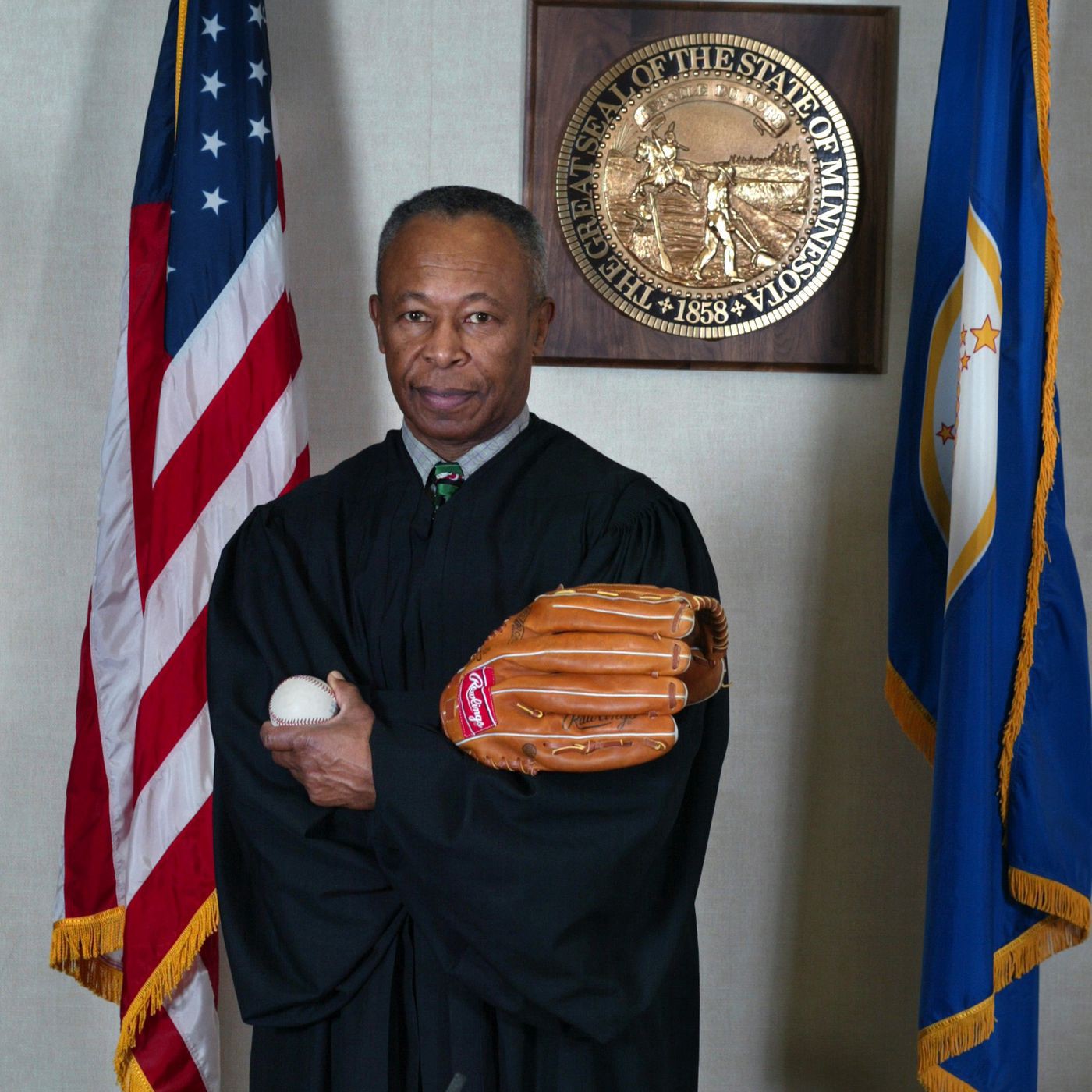
Appointed to the position of District Court Judge in Hennepin County in 1987, Crump’s road to the bench began at DePaul University School of Law, where he graduated on the Dean’s List in 1974. After 13 years as a lawyer, Crump assumed the job that would eventually land him in the crosshairs of one of baseball’s most intriguing cases.
On November 16, 2001, Crump heard the case and filed an injunction requiring the Twins to play out the 2002 season and fulfill their lease at the Metrodome.
Baseball would appeal several times, losing every time.
While quotes would emerge in the immediate aftermath of Crump’s ruling from both sides, baseball wanting to paint him as a hyper-biased baseball fan ruling in favor of heart over commerce, and the city and its fans painting him as a folk hero, the judge himself was ambivalent of both sides’ labels and saw the case as open and shut.
“To me, it was an easy decision, Crump told USA Today Sports back in 2014. “Really, it took me only 20 minutes. It was just another day of work. But of all of the tens of thousands of cases I’ve had, people still bring it up all of the time.”
On December 13, 2001, contraction talks had formally ended. On January 12, 2002, MLB announced that no teams would be eliminated for the upcoming 2002 season.
On January 16, 2002, Jeffrey Loria would sell the fledgling Montreal Expos to MLB for $120 million. Loria then used that money, plus a $38.5 million interest-free loan from MLB, to buy the Florida Marlins from John Henry.
John Henry, previously tied to potential ownership of the Angels if the contraction plans had gone through, used his earnings on the Marlins sale, plus additional investments from businessman Mark Werner, to buy the Boston Red Sox from the Yawkey Trust.
The Twins, their players indignant over what they considered to be a massive slight by baseball to try and eliminate them, would win the AL Central and go on to reach the ALCS in 2002, narrowly missing out on a World Series berth.
In February 2002, MLB announced that contraction was no longer an option in the foreseeable future.
Baseball’s new CBA would later dictate that contraction would not be an option until 2006, at earliest. It has never been proposed since.
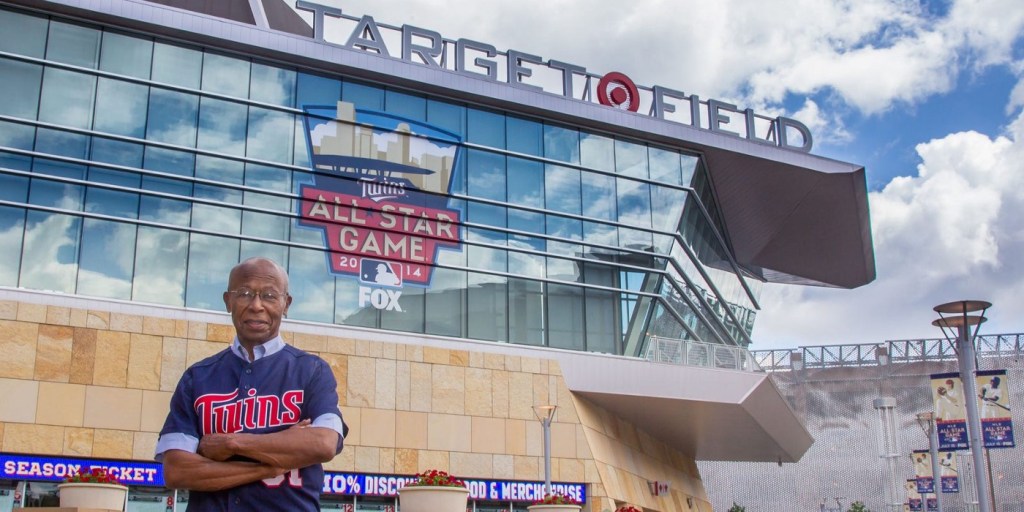
In 2010, the Twins opened Target Field in the historic warehouse district of downtown Minneapolis.
The Expos, now property of MLB, would finish last in attendance every one of their last years in Montreal. In 2003 and 2004, with attendance in Montreal reaching historic low levels, MLB had the Expos playing nearly half of their home games at Estadio Hiram Bithorn in San Juan, Puerto Rico.
In 2005, the Expos were sold to Ted Lerner for $450 million and relocated to Washington D.C. and renamed the Nationals. After three years in D.C.’s old Robert F. Kennedy Stadium, they moved to Nationals Park.
In 2019, the Nationals were managed to their title by one-time Expos player, Dave Martinez.
If not for that mundane day at work for an unassuming Hennepin County judge in 2002, baseball, and its most recent history, would look VERY different.
 Five Tool Talk
Leave a comment