On October 14, 1992, the Pittsburgh Pirates stood one out away from eliminating the Atlanta Braves and earning a trip to the World Series.
All that stood between them and their first trip to the Fall Classic since 1979 was a reserve outfielder named Francisco Cabrera, who had only ten at-bats at the Major League level that season, and who would be out of baseball completely by the end of 1993 at the age of 26.
But in this moment, at this juncture, he’s Bobby Cox’s last hope.
Cabrera laces a 2-0 pitch from Braves reliever Stan Belinda into left field, which allows David Justice to score from third. But barreling towards and around third behind him was Sid Bream, a former Pirate and a player hobbled by multiple knee surgeries.
Bream, seeing perhaps that the left fielder was coming from deep in left and at an unusual angle, ran through his third base coach’s stop sign and hurdled himself home.
The throw from left was strong, but just a tick or two late. Bream clumsily slid in, and the Atlanta Braves were headed back to the World Series.
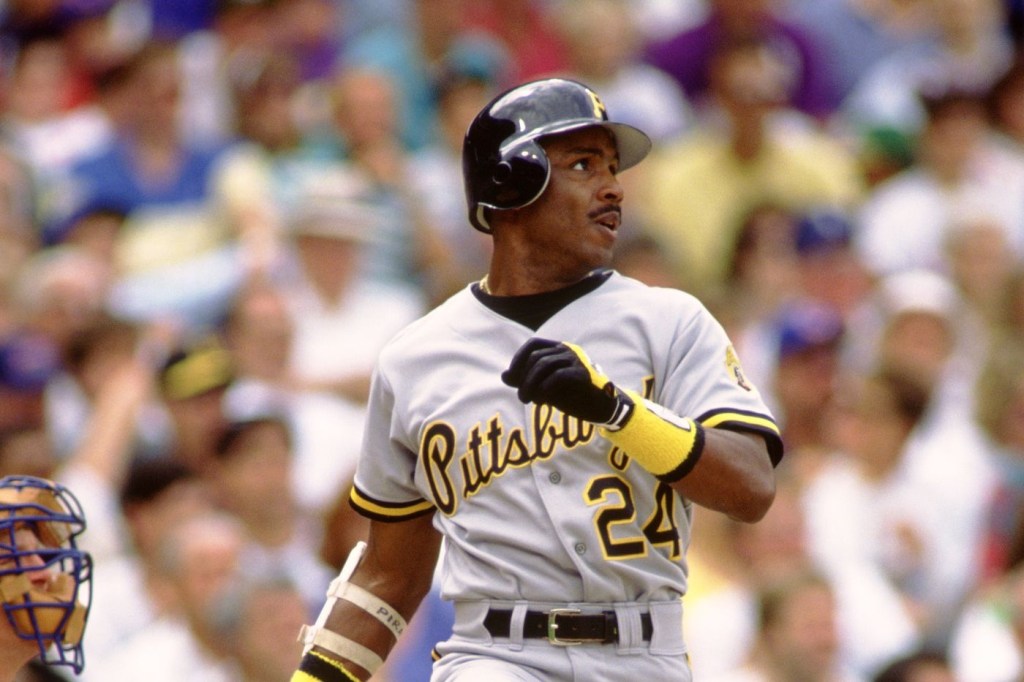
The Pirates had gambled to get here, knowing full-well that free agency loomed for their Cy Young-winning ace, Doug Drabek, as well as the left fielder who had nearly thrown Bream out, 1990 NL MVP (and ’91 runner-up) Barry Bonds.
For Pittsburgh, this was their third consecutive trip to the NLCS.
They had come up short in 1990, losing in six games to the eventual World Champion Cincinnati Reds, and again in ’91 in seven games to these very same Atlanta Braves, who would drop the World Series to the Twins.
Coming into 1992, the Pirates’ front office felt that perhaps it was better to shut the window a year early and begin to re-tool rather than come up short again, only to watch as their expensive free agents departed for greener pastures with no compensation for their troubles.
Pirates GM Ted Simmons, a Hall of Fame player in his own right as a catcher for 13 years in St. Louis, 5 years in Milwaukee, and three years in Atlanta, was brought in by Pirates ownership to help spearhead a rebuild.
He had already begun the process that Spring by trading 20-game winner John Smiley to the World Champion Twins and releasing closer Bill Landrum within a two-day window, and had traded serviceable left-hander Neal Heaton to Kansas City for, get this shit, Kirk Gibson.
Yes, that Kirk Gibson.
The 42-year-old Simmons then struck a deal during spring training to deal Bonds to the same Braves team that had ended Pittsburgh’s season just five months prior.
In return, Braves GM John Schuerholz agreed to send to Pittsburgh reliever Alejandro Pena, outfielder Keith Mitchell, and a prospect-to-be-named-later.
Pirates manager Jim Leyland, once informed of the impending deal, famously threw a fit to end all fits, becoming violently enraged towards Pirates team president Carl Barger, as well as Simmons.
The Braves, unbeknownst to them, had already prepared press releases to announce the deal, received approval from owner Ted Turner, and had even received approval from Pena, who had a no-trade clause in his contract.
Schuerholz, who had struck the deal and gone to bed thinking he had acquired a superstar to aid his National League powerhouse, phoned up Simmons to line up the timing of the announcement to the media.
Of course, he was informed of Pittsburgh’s about-face and history was forever changed.
The Braves eliminated the Pirates once again in seven games in the NLCS and would eventually lose the ’92 World Series to the Toronto Blue Jays, and Bonds would return home to San Francisco in 1993.
But what if the Braves had gotten their man on that March day in 1992?
For starters, the Braves are probably not playing the Pirates in the NLCS as I think Pittsburgh would have been preparing for football season by then.
Atlanta would have boasted an outfield of David Justice in right, Otis Nixon in center, and Bonds in left.
Bonds, of course, went on to win the NL MVP in 1992 with a monstrous .311/.456/.624 line, 34 home runs and 39 stolen bases, a league-leading 204 OPS+, his third consecutive Gold Glove, and nine wins above replacement.
At 27, Bonds was a machine.
The cool thing about any hypothetical is that we know what the Braves were dealing to Pittsburgh and, even for the time, it was a robbery.
True, we don’t know who the prospect was going to be, but unless it was catcher Javy Lopez or 1B/LF Ryan Klesko, both 21-year-old rookies then who would debut in ’92, that deal was terrible then and historically awful now.
By every metric available, Bonds was an upgrade over Ron Gant, the actual regular left fielder for the ’92 Braves, but how would his personality have meshed with the business-like, drama-free Braves of the 90s?
It’s not as though we’re talking about Kanye West over here, but Bonds’ mercurial relationship with the press and the demands of stardom were always bubbling over in Pittsburgh, and the racial tensions that persisted just beneath the surface there were prime movers for that distance between star and city.
But let’s pretend that none of that is present; Bonds gets to Atlanta, and he fucking loves it. He loves the city, and they love him.
Atlanta, already clear favorites in the NL, likely still end up in the World Series.
Every one of Toronto’s four wins in that six-game series was decided by one run.
The Braves started Deion Sanders in left in four of the six games, opting to utilize the NFL Hall of Famer versus righties while Gant started against southpaws.
Bonds, of course, was a horrible postseason performer early in his career, never really showing up in October until 2002 when he had a historic postseason that ended with a Game 7 loss in the World Series.
But would Bonds have done better with Nixon, Terry Pendleton, and David Justice hitting ahead of him? Would he have felt better about sharing the responsibility of carrying a team rather than feeling like he had to do it all himself?
Plenty of great players have shitty postseason resumés, and Bonds was one of them until his final postseason run in 2002, but so much of that has to do with the guys around you, the experience around you, and the calm that experience breeds.
The Braves were well on their way to being the “team of the 90s” that Bob Costas would eventually dub them as when they clinched the 1995 World Series title, but glory had not found them yet in 1992.
With so many one-run losses in one series, it would be interesting to see the effect of what even a low-performing Bonds would have had on that series. How does just the presence of Bonds effect the way he’s pitched, not to mention the guys around him in the lineup?
I think it’s safe to say, with so many games being decided by a bounce here and a play there, Bonds’ mere presence would have changed that series a great deal.
Now, if Bonds re-signs with Atlanta, it’s very likely that Atlanta then forgoes any pursuit of 1992 Cy Young Award winner Greg Maddux, who eventually signed with Atlanta with the money that Schuerholz was absolutely hoping to spend on a Bonds extension.
The Braves are still very good without Maddux, but can you even fathom a 90s Braves run without Greg Maddux present?
In 1995, the year the Braves finally brought home their own Commissioner’s Trophy, Maddux went a ridiculous 19-2 with a 1.63 ERA, a FIP of 2.26, a WHIP of 0.81, and a 260 ERA+.
Oh, and he won his fourth consecutive Cy Young Award and sixth consecutive Gold Glove Award. He would win seven more in a row, and 12 total.
The Braves won 14 consecutive division titles, not including the strike-shortened 1994 season, won five pennants, and one World Series.
Bonds alters that arithmetic if that trade goes down, but not adding Maddux does too.
Consider a few years down the road in 1996.
The Braves are featuring a roster with Chipper Jones, Javy Lopez, Fred McGriff, Marquis Grissom, and a 19-year-old Andruw Jones is going to debut that season. Klesko provides great production in left, but perhaps he’s shifted to right, or even dealt away with the presence of Bonds, in hopes of fetching another starter to place next to 24-game winner John Smoltz and 15-game winner Tom Glavine.
Bonds’ 1996 season was, yet again, another all-around monster campaign, with Bonds slugging 42 homers and driving in 129, producing a .308/.461/.615 line, drawing a league-leading 151 walks against just 76 strikeouts in 675 plate appearances, and procuring yet another Gold Glove in left.
Oh, and he stole 40 bases.
Holy shit, I’m probably setting Ryan Klesko on fire if it means Bonds is replacing him in this lineup.
Bonds led the league in runs created with 162 and managed to hit a home run once every 12.3 at-bats, which was tops in baseball.
Bonds also led the league in Win Probability Added (WPA) with 7.8.
His closest competitors were Astros first baseman Jeff Bagwell (7.0) and Marlins right fielder Gary Sheffield (6.4).
The Braves lost in six games to the Yankees in the 1996 World Series, blowing a 2-0 series lead and losing the final two games by one run apiece in low-scoring affairs (1-0 and 3-2).
Again, just as in 1992, the Braves are cooked in the Fall Classic due to an underperforming offense. It is impossible to imagine Bonds’ postseason struggles continuing while simultaneously surrounded by All-Stars and future Hall of Famers.
It’s a fascinating ‘What If…’ case study, but it ultimately didn’t come to fruition because Jim Leyland popped his top and (probably, perhaps even likely) put a cigarette out on Carl Barger’s face and threatened worse if he allowed Ted Simmons and the Pirates to deal Barry Bonds to Atlanta for a relatively useful reliever, a guy whose claim to fame is my cousin is Kevin Mitchell, and a bottle of rum.
It’s difficult to blame anyone in this scenario for their actions in 1992, but what an unreal scenario the Braves find themselves in if Jim Leyland isn’t capable of violent rage.
 Five Tool Talk
Leave a comment